
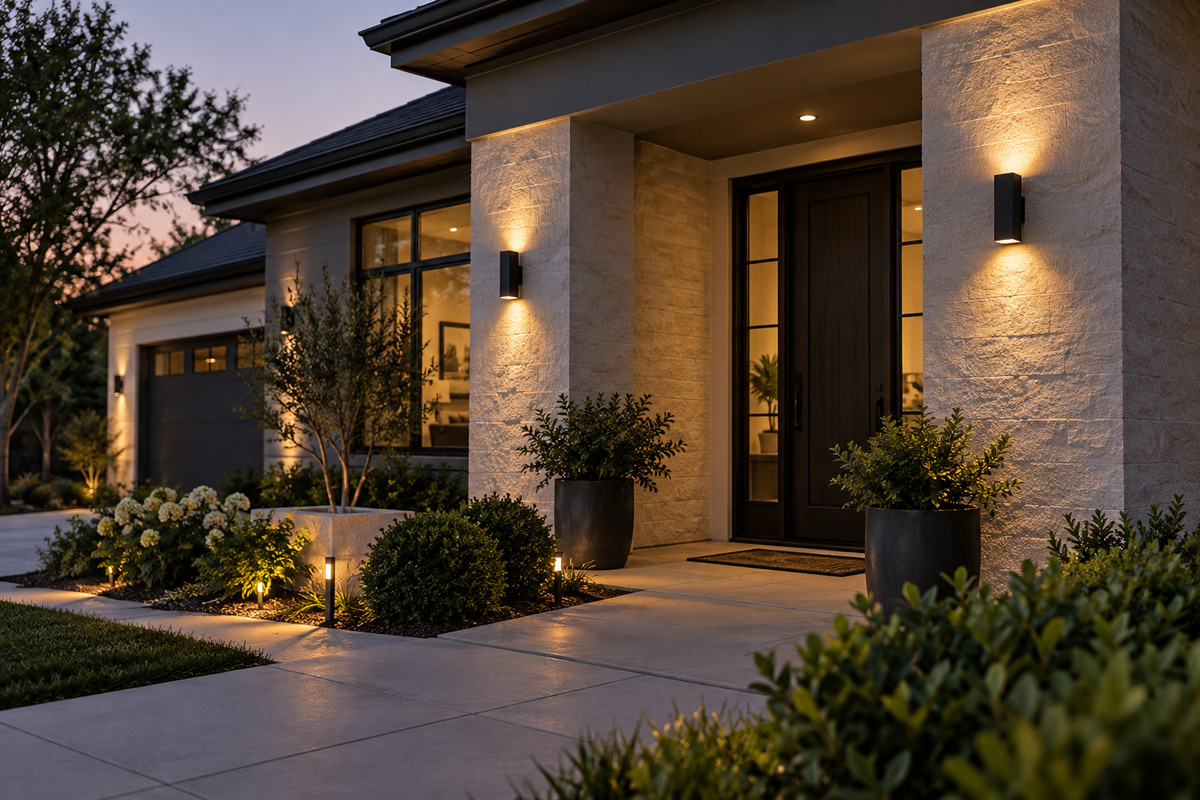
LED wall lights do more than simply brighten a wall. The right fixture can improve nighttime visibility, highlight architectural details, create depth, and make an entrance, patio, hallway, or living space feel more intentional.
With choices ranging from compact square fixtures to long linear designs, curved sconces, halo-style lights, and architectural up-and-down lighting, choosing the right wall light starts with understanding where it will be installed and what kind of lighting effect you want to create.
In this guide, we’ll look at the most important factors to consider when choosing LED wall lights for indoor and outdoor spaces.
1. Start With the Lighting Effect You Want
Before choosing a wall light based only on its shape, think about the job the light needs to do.
Up & Down Wall Lighting
Up-and-down wall lights project light above and below the fixture, creating visible patterns across the wall. This lighting style is especially popular in modern architecture because the wall itself becomes part of the lighting design.
Common applications include:
- Front entrances
- Exterior house walls
- Garage walls
- Porches and patios
- Hallways
- Stairways
- Feature walls
- Commercial façades
For a clean contemporary appearance, a long linear up-and-down LED wall light can work particularly well on tall walls, columns, entrances, and modern façades.
Decorative Architectural Lighting
If the fixture itself is intended to become part of the visual design, look at sculptural shapes such as curved, framed, halo, or geometric wall lights.
View Halo Ring LED Wall Light →
2. Choose the Right Wall Light for Indoor or Outdoor Use
Installation location is one of the most important considerations when choosing a fixture.
Indoor Wall Lighting
Indoors, wall lights can provide accent lighting without relying entirely on ceiling fixtures. They are commonly used in:
- Hallways
- Stairways
- Living rooms
- Bedrooms
- Entry areas
- Accent walls
- Restaurants
- Hotels
- Reception areas
For indoor installations, fixture shape, light direction, brightness, finish, and color temperature are usually the main design considerations.
Outdoor Wall Lighting
Outdoor lighting needs to handle more demanding conditions, including moisture, rain, dust, and changing temperatures. For exposed areas, always check the protection rating of the individual fixture before installation.
Many models in the LED Wall Lights collection use IP65-rated housings and are designed for locations such as:
- Front porches
- Balconies
- Garden walls
- Patios
- Exterior columns
- Garage walls
- Building façades
3. Select the Right Color Temperature
Color temperature has a major effect on the mood and appearance of a space. Wall lights in this collection are available in different color-temperature options depending on the model, including warm, neutral, and cooler white light.
| Color Temperature | Appearance | Good For |
|---|---|---|
| 3000K | Warm, comfortable white | Entrances, porches, patios, homes, hospitality spaces |
| 4000K | Neutral, clean white | Hallways, modern interiors, offices, commercial entrances |
| 6000K–6500K | Cool, crisp white | Modern exteriors, utility areas, commercial environments |
3000K for a Warmer Entrance
Warm white is often a good choice around front doors, patios, and residential façades because it produces a softer and more welcoming appearance.
4000K for a More Neutral Look
Neutral white can work well in contemporary interiors and commercial environments where you want clean illumination without the noticeably cool appearance of daylight white.
6000K–6500K for a Crisp Modern Effect
Cooler white light produces a sharper visual appearance and can complement minimalist exterior architecture or spaces where a cooler lighting style is preferred.
4. Match the Wattage and Fixture Size to Your Space
A small porch does not need the same wall light as a large exterior façade. Choosing the right size and output helps the fixture look proportional to the architecture.
| Application | What to Consider |
|---|---|
| Small porch | Compact fixture with controlled decorative illumination |
| Hallway | Small or medium wall lights installed at consistent spacing |
| Front entrance | Medium architectural fixture that complements the doorway |
| Large exterior wall | Longer fixture, higher-output model, or repeated wall lights |
| Commercial façade | Larger architectural fixtures with stronger visual impact |
| Feature wall | Decorative up/down or sculptural fixture |
If you want more flexibility, the 6W / 10W / 20W / 30W up-and-down wall light is available in several power and finish options, making it easier to match different wall sizes and design styles.
5. Choose a Shape That Matches the Architecture
A wall light remains visible during the daytime, so the fixture itself should complement the building even when it is switched off.
Linear Designs
Long, narrow wall lights work especially well with minimalist homes, contemporary façades, columns, tall entryways, and commercial architecture.
Square & Round Designs
Compact geometric designs are easy to integrate into porches, balconies, hallways, and other areas where you want a simple architectural shape.
View 7W Square & Round Wall Lights →
Open Frame Designs
Open or framed wall lights create a stronger architectural presence and can work particularly well on modern façades, entrances, patios, and contemporary commercial spaces.
One example is the Open Frame LED Wall Light, which combines a geometric form with architectural wall illumination.
Curved Designs
Curved wall lights soften the appearance of a highly geometric space and can be a good match for residential interiors, hospitality projects, corridors, and modern outdoor areas.
For this style, see the Smooth Curve LED Wall Light.
6. Use Repetition to Create Better Exterior Lighting
One of the most effective ways to use wall lights outdoors is to install several matching fixtures at consistent intervals.
Instead of relying on one very bright fixture for a long garage wall or building façade, repeating smaller wall lights can create:
- More balanced illumination
- A stronger architectural rhythm
- More consistent wall-washing effects
- A cleaner nighttime appearance
- Better visual definition across long surfaces
This is especially effective with up-and-down fixtures because each light produces its own visible pattern across the wall.
7. Consider the Wall Surface
The wall material also affects the final lighting effect.
A smooth wall tends to create cleaner, more defined areas of light, while textured materials can produce a more dramatic appearance by revealing the surface structure.
Architectural wall lighting can look particularly effective on:
- Stucco
- Stone
- Brick
- Concrete
- Wood cladding
- Textured feature walls
When planning the installation, think about the fixture and wall surface as one lighting composition rather than two separate elements.
Where Are LED Wall Lights Commonly Used?
Front Entryways
Wall lights positioned around a front door can improve nighttime visibility while giving the entrance a more welcoming appearance.
Porches & Patios
Outdoor-rated fixtures can combine practical illumination with decorative architectural lighting around seating areas and exterior walls.
Garage Walls
Several matching fixtures spaced along a large garage wall can make the façade feel more balanced while providing useful nighttime illumination.
Hallways & Stairways
Wall-mounted lighting adds another layer of illumination and can help reduce dependence on a single overhead ceiling fixture.
Gardens & Outdoor Architecture
Wall lights can be installed around patios, boundary walls, columns, or garden structures to connect the landscape with the architectural lighting design.
Hotels, Restaurants & Commercial Spaces
Architectural wall lights are also useful in reception areas, corridors, restaurants, hotels, and other commercial environments where both atmosphere and visual presentation matter.
Quick LED Wall Light Selection Guide
| If You Need... | Consider... |
|---|---|
| A warm residential entrance | 3000K up-and-down wall lighting |
| A minimalist modern façade | Long linear black wall lights |
| Several lights for one wall | Compact multi-pack square or round fixtures |
| A more decorative appearance | Halo, curved, framed, or sculptural designs |
| Outdoor installation | A fixture with an appropriate outdoor protection rating |
| More design flexibility | Models with multiple wattages, sizes, finishes, or color temperatures |
Choosing the Right LED Wall Light
There is no single wall light that works for every project. A better approach is to answer four questions first:
- Where will the fixture be installed? Indoors or outdoors?
- What lighting effect do you want? Functional, decorative, or architectural?
- What atmosphere fits the space? Warm, neutral, or cool white?
- What fixture style matches the architecture? Linear, square, curved, halo, framed, or another design?
Once those decisions are clear, choosing the right size, wattage, finish, and lighting direction becomes much easier.
Conclusion
Choosing the right LED wall light starts with the installation location and the lighting effect you want to create. Indoor and outdoor environments have different requirements, while fixture shape, color temperature, wattage, size and wall surface all influence the final result.
Compare the available options in the LED Wall Lights collection to find a fixture that fits the architecture and intended application.

Leave a comment
This site is protected by hCaptcha and the hCaptcha Privacy Policy and Terms of Service apply.